Eco-Friendly Paints & Sustainable Decorating Solutions for Business
The challenge: delivering performance without compromising sustainability
Across the UK construction and refurbishment sector, expectations are shifting. Building owners and contractors are under increasing pressure to meet sustainability targets while maintaining programme certainty, compliance, and finish quality.
For commercial decorating contractors in the UK, this presents a practical challenge. Coatings and finishes must not only perform technically but also align with wider environmental objectives such as net zero strategies, BREEAM ratings, and embodied carbon reduction.
The question is no longer whether sustainable painting is possible. It is how to deliver it consistently on complex, high-value projects without introducing risk.
Defining the problem: sustainability versus specification
Sustainability in decorating is often misunderstood as a simple material choice. In reality, it sits at the intersection of compliance, performance, and lifecycle impact.
Key pressures include:
- Client-led sustainability targets, particularly on flagship developments
- Regulatory Expecations around indoor air quality and emissions
- Refurbishment constraints, including heritage elements and existing materials
- Programme demands, where speed cannot compromise quality
Low-quality or poorly specified eco products can lead to durability issues, increased maintenance cycles, or non-compliance. For contractors, the risk is clear. Sustainable solutions must be technically robust, not just environmentally favourable.
Technical insight: what makes decorating sustainable
Sustainable painting in the UK construction sector is built on a combination of material selection, installation practices, and long-term performance.
Low VOC coatings
Volatile Organic Compounds contribute to poor indoor air quality and environmental impact. Modern water-based and low VOC coatings significantly reduce emissions without sacrificing durability or finish.
On major projects, these coatings are often specified to meet both environmental standards and occupant wellbeing requirements.
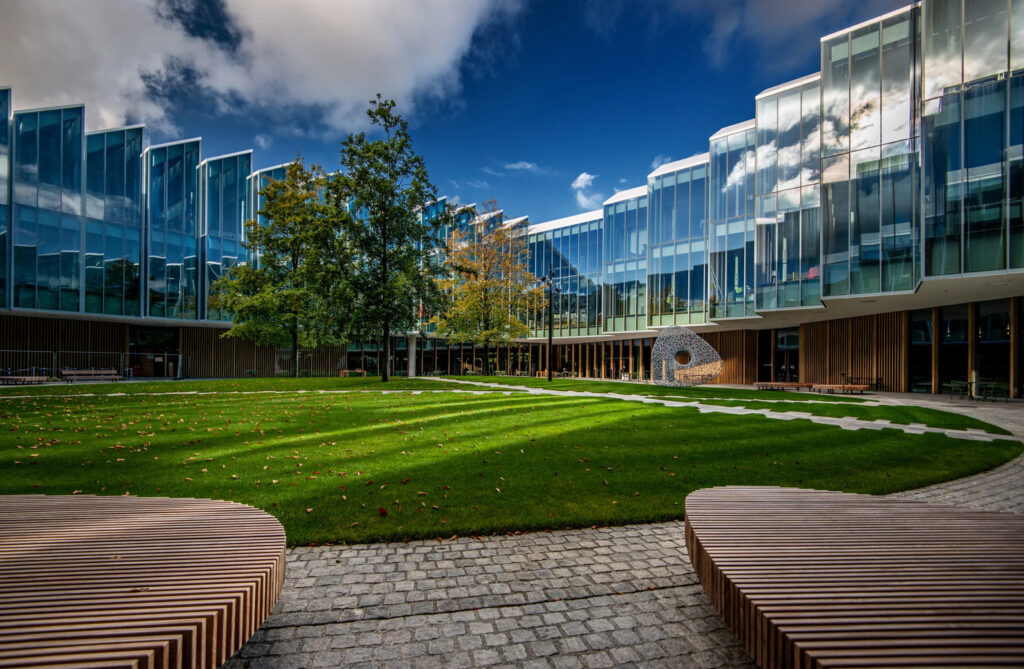
For example, on the AstraZeneca Discovery Centre, low VOC intumescent coatings were selected as part of a wider strategy to support a zero-carbon programme and achieve a BREEAM Excellent rating.
Embodied Carbon Reduction
Reducing embodied carbon goes beyond choosing greener products. It involves minimising waste, reducing material replacement, and optimising installation methods.
This can include:
- Selecting systems with longer lifecycle performance
- Retaining existing substrates and coatings where viable
- Avoiding unnecessary strip-out
Material retention & re-use
Refurbishment projects offer a significant opportunity to reduce environmental impact through retention. However, this requires technical judgement and careful execution.
At 3 Sheldon Square, the project required the retention of existing fire protection systems wherever possible. By sourcing matching materials and avoiding full replacement, the team reduced both cost and embodied carbon while supporting the client’s sustainability objectives.
Compliance and tested systems
Sustainable solutions must still meet stringent fire, durability, and performance standards. This is particularly important where decorative finishes intersect with passive fire protection systems.
All materials must be:
- Tested and certified
- Installed by competent contractors
- Suitable for the specific building use and environment
Sustainability cannot come at the expense of safety or compliance.
Real-world application: sustainability on complex projects
Sustainability was central to the delivery of this £1 billion research facility. The specification required materials that supported ambitious carbon reduction targets while maintaining the highest levels of performance.
Low VOC coatings and carefully selected fire protection materials contributed to a building that not only achieved BREEAM Excellent but also aligned with a broader zero emissions strategy.
This demonstrates how eco-friendly painters across the UK can integrate sustainability into technically demanding environments such as laboratories and research facilities.
On this high-profile mixed-use development, sustainability was balanced alongside complex structural and operational constraints.
While the project is best known for its innovative fire protection solution around anti-vibration systems, it also required extensive commercial decorating across retail, residential, and office spaces.
Delivering consistent finishes in such an environment requires careful material selection and coordination, particularly in high-visibility locations where quality and durability are critical.
Refurbishing heritage buildings introduces additional environmental considerations. Retaining original features, managing hazardous legacy materials such as lead paint, and working within conservation constraints all contribute to a more sustainable outcome when handled correctly.
This highlights the role of specialist contractors in balancing preservation with modern environmental standards.
Practical takeaway: what to consider on your next project
For building managers, asset owners, and main contractors, sustainable decorating should be approached as a strategic decision rather than a product choice.
Key considerations include:
1. Specify early
Engage specialist contractors at an early stage to ensure sustainable options are compatible with programme, compliance, and performance requirements.
2. Prioritise proven systems
Select coatings and materials with established performance data. Avoid untested alternatives that may introduce long-term risk.
3. Consider lifecycle impact
Durability matters. A longer-lasting system reduces maintenance cycles and overall environmental impact.
4. Maximise retention where possible
Assess existing materials before specifying replacement. Retention can significantly reduce embodied carbon and project cost.
5. Align with wider sustainability frameworks
Ensure decorating specifications support broader targets such as BREEAM ratings, net zero commitments, and corporate ESG strategies.
Conclusion
Sustainable painting in the UK is no longer a niche requirement. It is an integral part of delivering modern commercial buildings that meet environmental, regulatory, and performance expectations.
For commercial decorating contractors in London, the focus is on delivering solutions that are both technically sound and environmentally responsible.
When approached correctly, eco-friendly decorating does not compromise quality or programme. It enhances it, providing buildings that perform better, last longer, and align with the direction of the industry.

Decorating Occupied Hospitals and Healthcare Buildings: Infection Control Meets Programme Certainty

Redecorating a live hospital ward is nothing like redecorating an empty office floor. The patients do not leave. The clinical routines do not pause. Infection control procedures do not relax because a contractor needs to apply a second coat.

When was your building last Fire Inspected?
Fire protection can be installed correctly at construction yet still need attention later, as buildings change, services are added, refurbishments occur, and new penetrations appear behind ceilings and finishes.