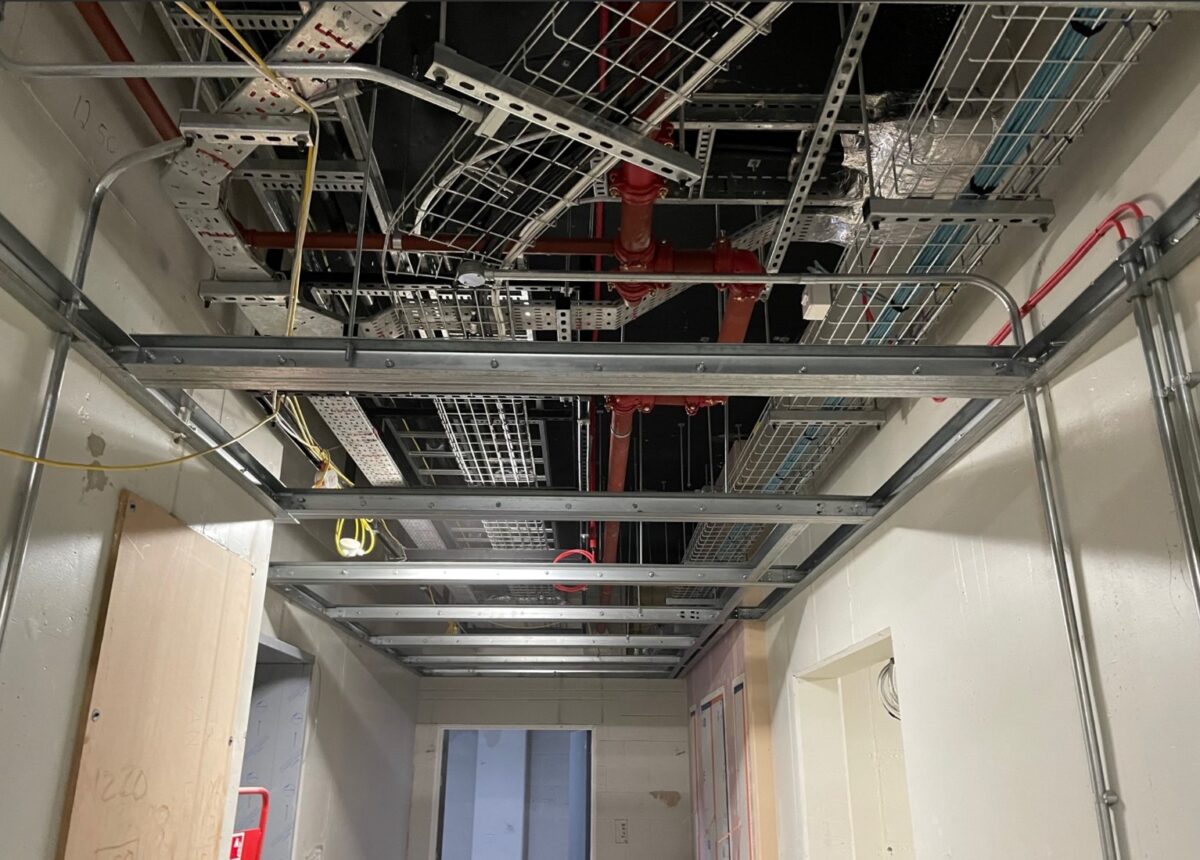
Integrating Fire Stopping During Construction: A Contractors Perspective
On many UK commercial construction projects, fire stopping is treated as a final trade. It is often programmed after services are installed, ceilings are closed and partitions are complete.
From a contractor’s perspective, this is where risk begins.
Fire stopping UK compliance is not simply about sealing gaps at the end of a programme. It is about protecting compartmentation strategy, maintaining certified fire barriers and ensuring the building performs as designed in the event of fire.
Early coordination makes the difference between compliance by design and compliance by correction.
The Challenge in Fit Out Projects
Construction environments are fast-moving and service-intensive. Multiple trades operate simultaneously. MEP installations evolve. Late design changes are common.
In this environment, passive fire protection can become reactive rather than planned.
Common issues include:
- Penetrations installed without agreed fire stopping detail
- Incompatible systems used across different zones
- Fire barriers compromised by late service alterations
- Access constraints once ceilings and finishes are complete
Rectifying these issues late in the programme introduces cost, delays and compliance risk.
For main contractors and architects, early coordination is not an administrative exercise. It is a risk management strategy.
Why Early Integration Matters
Fire stopping works because it forms part of a tested system. Fire barriers, compartment walls, service penetrations and structural fire protection must perform together.
When fire stopping is considered at design and pre-start stage, contractors can:
- Review penetration schedules alongside MEP design
- Confirm compatible tested systems
- Coordinate sequencing with drylining and ceiling contractors
- Ensure inspection and sign-off stages are programmed properly
This avoids the scenario where fire barriers are retrospectively adapted to suit services that were never coordinated in the first place.
In complex commercial Construction projects across the UK, this level of coordination protects both programme and compliance.
A Contractor’s Perspective on Best Practice
From site experience, effective fire stopping UK delivery during fit out depends on three core principles.
Clarity of responsibility
Fire stopping must have clear ownership within the programme. It cannot sit ambiguously between trades.
Early technical review
Penetration types, movement requirements and service density should be reviewed before installation begins, not after ceilings are closed.
Inspection before concealment
Fire barriers and service seals must be inspected and recorded before finishes make access difficult.
When these principles are followed, fire stopping becomes a controlled process rather than a remedial exercise.
The Impact on Compliance and Certification
Current UK fire safety regulation places increased emphasis on traceability, competence and documented installation.
During fit out, poor coordination can undermine:
- Compartmentation integrity
- Certified system performance
- Inspection records
- Handover documentation
By integrating fire stopping into early design conversations, contractors and architects ensure that compliance is embedded, not retrofitted.
Sustainability and Programme Efficiency
Early integration also supports sustainability objectives.
Avoiding rework reduces material waste.
Correct specification minimises unnecessary product use.
Sequenced installation improves labour efficiency.
In high-value UK commercial fit out projects, this translates into measurable carbon and cost savings.
Practical Considerations for Main Contractors and Architects
Before commencing fit out, ask:
- Has the fire stopping strategy been reviewed against final MEP layouts?
- Are all fire barriers clearly identified and protected during sequencing?
- Are tested systems specified for each penetration type?
- Has inspection and photographic recording been built into the programme?
- Is there clear accountability for passive fire protection coordination?
Addressing these questions early significantly reduces downstream risk.
Conclusion
Fire stopping during fit out should never be treated as a closing trade.
It is a fundamental part of the building’s life safety strategy and must be coordinated from the outset.
For main contractors and architects delivering complex London projects, early integration protects fire barriers, safeguards compliance and preserves programme certainty.
From a contractor’s perspective, the objective is simple: design it early, coordinate it properly and install it correctly.
Whatever the scale or complexity of your fit out project, Sentinel brings the experience, technical knowledge and disciplined installation approach required to deliver compliant, coordinated fire stopping from day one.

Industrial Painting vs Commercial Decorating: Why Quality of Finish Matters

When a project specification calls for coatings, surface preparation and compliance with British Standards, the terminology used is important.

See the Video