
Decorating Occupied Hospitals and Healthcare Buildings: Infection Control Meets Programme Certainty
Redecorating a live hospital ward is nothing like redecorating an empty office floor. The patients do not leave. The clinical routines do not pause. Infection control procedures do not relax because a contractor needs to apply a second coat.
For any healthcare decorating contractor in the UK, this is the defining challenge of the sector. The work has to be delivered to the same technical standard expected on any commercial project, but within an environment where clinical safety, patient wellbeing and infection prevention take priority over programme convenience.
Getting this right is not simply a matter of care and courtesy. It requires a different way of planning, sequencing and executing decorating works from the outset.
The Challenge of Working in Occupied Clinical Environments
Healthcare estates rarely offer the luxury of a clear site. Wards, outpatient departments, research facilities and treatment areas often need to remain operational throughout a refurbishment or fit out programme.
This creates a set of pressures that do not exist on a typical commercial scheme:
- Infection control requirements that govern access, containment and material selection
- Restricted working hours around clinical activity, ward rounds and patient rest periods
- Segregation of works areas to prevent dust, fumes or debris reaching clinical spaces
- Coordination with infection control teams, estates departments and clinical staff
- Products and processes that must be low odour, low VOC and compatible with sensitive occupants
Get any of these wrong and the consequences go beyond a missed deadline. Poorly managed decorating works in a healthcare setting can compromise infection control, disrupt patient care, and damage the trust between contractor and client.
Infection Control Painting: A Different Technical Discipline
Infection control painting is not simply standard decorating carried out more carefully. It is a distinct discipline with its own material and procedural requirements.
Coatings used in clinical and near-clinical environments typically need to support cleaning regimes, resist bacterial growth where specified, and avoid strong odours or high VOC emissions that could affect vulnerable patients or sensitive research equipment. Surface preparation must be equally rigorous, since poor preparation undermines both durability and the hygienic performance of the finished surface.
Sequencing matters just as much as product selection. Works are usually broken into small, controlled zones, each fully sealed and ventilated before decoration begins, and each signed off before the barrier comes down and the space returns to clinical use. Waste, materials and equipment movement all need to be managed to prevent any risk of cross-contamination.
This is where experience in healthcare settings becomes as important as technical competence in the product itself. A contractor unfamiliar with clinical environments may specify a perfectly good coating and still fail, because the containment strategy, the access planning or the communication with infection control teams was never built into the programme.
Real-World Application
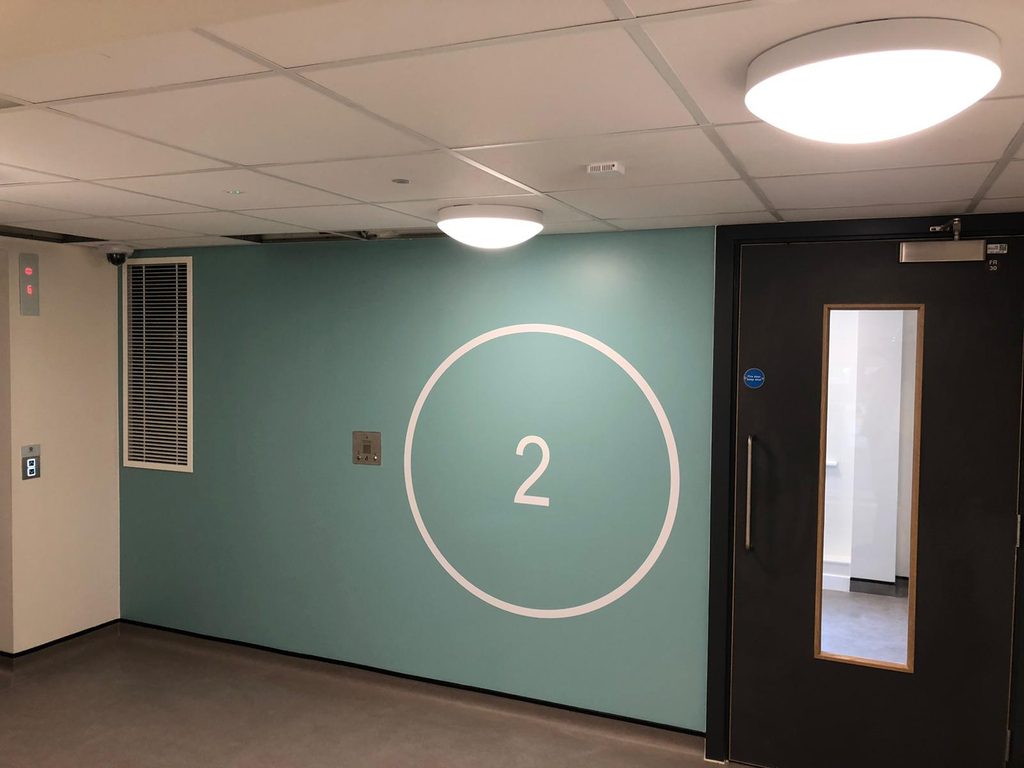
Sentinel’s work at Great Ormond Street Hospital’s Sight and Sound Centre demonstrates how these principles apply in practice. The project, delivered for main contractor Kier London, involved commercial decorating throughout the redeveloped Italian Hospital building in Bloomsbury, which now houses the UK’s first dedicated facility for children with sight and hearing loss. Restricted floor-to-soffit heights and limited electrical capacity added further constraints, but the priority throughout was selecting materials and finishes appropriate to the sensory needs of the building’s young patients and delivering them without disrupting a facility that continued to serve families throughout.
At the AstraZeneca Discovery Centre in Cambridge, sustainability and occupant wellbeing were central to the specification. Low VOC coatings and carefully selected fire protection materials supported a working research environment for 2,200 scientists, aligning technical performance with the client’s broader environmental and occupational health objectives, an approach that translates directly to occupied clinical settings where air quality and odour control are equally critical.
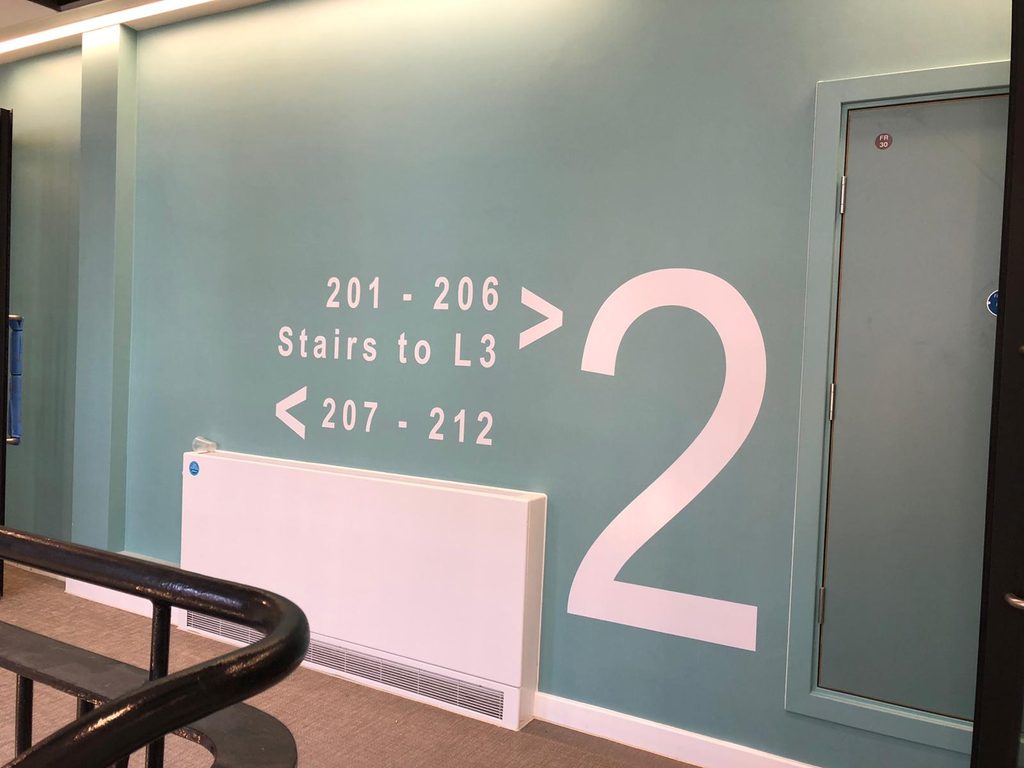
Maggie’s Centre at the Royal Free Hospital in Belsize Park offered a different kind of challenge. Delivered for Sir Robert McAlpine, the project required a high-quality decorative finish throughout a building designed to support cancer patients and their families at one of the most sensitive moments in their lives. Working in a confined site alongside other trades, careful sequencing was essential to protect both the build programme and the calm, uplifting environment the centre was designed to provide.
Practical Takeaway
For hospital estates teams, healthcare architects and main contractors planning decorating works in occupied clinical environments, a few questions are worth asking early:
- Has the infection control team been engaged before the programme is finalised, not after?
- Are the specified coatings appropriate for the clinical function of the space, including odour and VOC considerations?
- Is the containment and access strategy realistic for the ward or department’s operating hours?
- Has the sequencing been agreed with clinical staff, not just with the main contractor’s programme?
- Is there a clear sign-off process before each zone returns to clinical use?
Addressing these questions before works begin reduces disruption, protects patients and staff, and avoids the kind of late-stage compliance issues that are far harder to resolve once a ward is back in use.
Conclusion
Decorating an occupied hospital or healthcare building demands more than technical skill with a brush and roller. It requires an understanding of infection control, clinical operations and the sensitivities of the people who use these buildings every day.
For contractors and asset managers delivering healthcare projects, the right partner is one that treats infection control painting as a specialism in its own right, not an afterthought bolted on to a standard decorating specification.
Sentinel has delivered commercial decorating across some of the UK’s most sensitive healthcare and research environments, from children’s hospitals to cancer support centres and biomedical research facilities. If you are planning decorating works in an occupied clinical setting, speak to our team about how we can help deliver the finish your building needs without compromising patient care or programme certainty.

When was your building last Fire Inspected?

Fire protection can be installed correctly at construction yet still need attention later, as buildings change, services are added, refurbishments occur, and new penetrations appear behind ceilings and finishes.
Why Surface Preparation Determines the Durability of Every Paint Job
When a paint system fails, the product is often the first thing to take the blame. In reality, long-term performance is rarely determined by the name on the tin. It is determined by what happens before the first coat is applied.