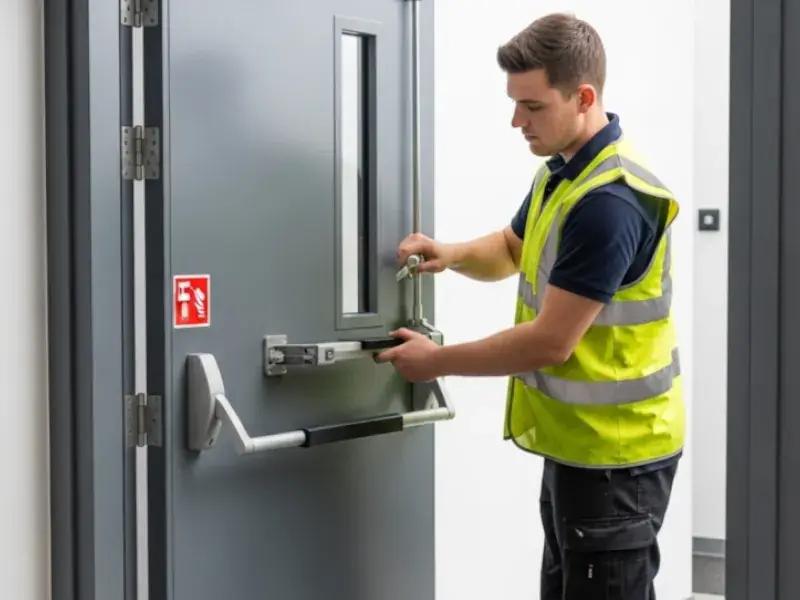
When was your building last Fire Inspected?
Fire protection measures can be installed correctly when a building is constructed and still require attention later in its life.
Buildings change. Services are added or replaced. Refurbishment work takes place. New penetrations are made through walls and floors. Areas that were once accessible are concealed above ceilings or behind finishes.
The question for building owners and managers is simple: do you know what condition your passive fire protection is in today?
A fire integrity survey can help establish what is actually present within a building, identify areas that require closer investigation and provide a clearer picture of any remedial work that may be needed.
What is a fire integrity survey?
A fire integrity survey examines the passive fire protection measures within a building.
Passive fire protection is built into the fabric of a property to help restrict the spread of fire and smoke and maintain the required performance of fire-resisting elements.
Depending on the building and scope of the survey, this can involve inspecting areas including:
- Fire compartment walls and floors
- Service penetrations
- Firestopping
- Risers
- Cavity barriers
- Fire doors
- Structural fire protection
- Fire-resisting walls and ceilings
The purpose isn’t simply to confirm that firestopping exists. The survey needs to consider its condition, how it has been installed and whether there are areas where the intended fire compartmentation may have been compromised.
Why might existing fire protection need checking?
A building isn’t static.
Mechanical and electrical services may be altered throughout its life. Cables and pipes can be added. Internal layouts change. Refurbishment programmes introduce new interfaces between existing and new construction.
Every change has the potential to affect passive fire protection.
A new service penetration through a fire-resisting wall, for example, needs an appropriate tested firestopping solution. It isn’t enough to fill the space around it with whatever material happens to be available.
There may also be legacy installations where the information available today is incomplete, or areas that have been concealed since the original construction.
This is why understanding the existing condition of a building can be so important before planning remedial works or a major refurbishment.
What can a fire survey identify?
Some passive fire protection defects can be relatively obvious. Others require experienced inspection and an understanding of how the different elements of a building work together.
A survey may identify issues such as incomplete firestopping, unsealed service penetrations, damaged or inappropriate materials, compromised compartment lines, defects around risers and cavities, or areas requiring further investigation.
The survey should also consider interfaces.
Firestopping rarely exists in isolation. Pipes, cables, ducts, walls, floors and structural elements come together in ways that can make the correct solution more complex than it initially appears.
This is where practical installation experience becomes particularly valuable.
Why practical firestopping experience matters
Sentinel’s experience covers both the design and installation of passive fire protection systems.
That gives our survey teams an understanding not only of what should be present, but of how passive fire protection systems are actually installed within complex buildings.
Our teams regularly work with firestopping, structural fire protection, intumescent coatings and fire-rated boarding systems across new-build and refurbishment projects.
That practical experience helps when examining existing installations, understanding interfaces and identifying areas that warrant further investigation.
It also helps bridge the gap between identifying an issue and understanding what may be required to address it.
From survey to a clear record
A fire integrity survey should give the client a clear picture of what has been inspected, what has been found and where further action may be required.
Photographic records can form an important part of that process, helping building owners, asset managers and project teams understand the location and nature of identified issues.
Where remedial works are required, that information can then help inform the next stage of the project. This approach also supports the wider principle of maintaining accurate information about a building and the fire safety measures within it throughout its lifecycle.
When should you consider a fire integrity survey?
There isn’t one single trigger that applies to every property.
However, there are several circumstances where understanding the condition of existing passive fire protection can be particularly valuable.
These include buildings undergoing refurbishment or alteration, properties where services have been changed extensively, older buildings where records may be incomplete, and situations where there are concerns about previous firestopping installations.
A survey can also be useful when an owner or asset manager simply does not have a clear, current picture of the passive fire protection within their building.
The important point is not to assume that because firestopping was installed at some point in the past, it remains unchanged and appropriate today.
Have you had your building checked?
Passive fire protection spends most of its life out of sight. That shouldn’t mean it’s out of mind.
Understanding what’s behind the walls, above the ceilings and within the risers can give building owners and managers a much clearer picture of the condition of their passive fire protection.
If you’re unsure when your building was last surveyed, or you have concerns about existing firestopping, speak to Sentinel‘s fire protection team about a Fire Integrity Survey.
Why Surface Preparation Determines the Durability of Every Paint Job

When a paint system fails, the product is often the first thing to take the blame. In reality, long-term performance is rarely determined by the name on the tin. It is determined by what happens before the first coat is applied.
Passive vs Active Fire Protection: What Every Building Manager Should Know
Fire safety is a critical responsibility for building managers, requiring a coordinated approach to protect occupants, support safe evacuation, and minimise damage across commercial, education, healthcare and mixed-use environments.